
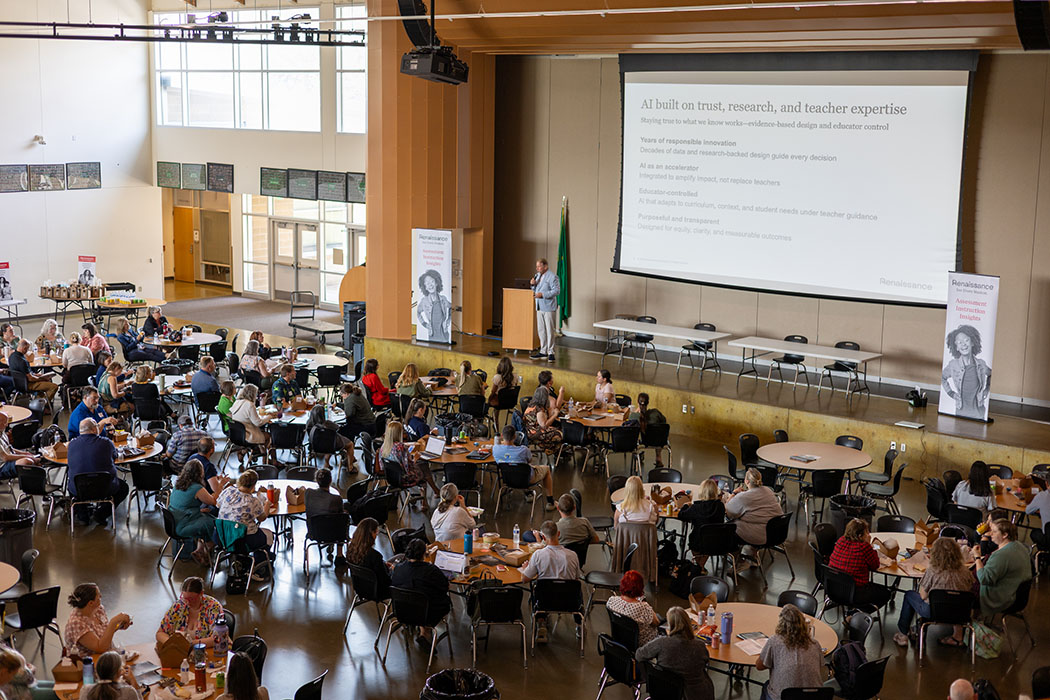
More than 160 attendees representing 45 school districts, educational service districts and partner organizations gathered on June 23 at Woodland High School for Forward ’26: AI + Innovation, a daylong conference on the opportunities and challenges of artificial intelligence in K-12 education.
The event was hosted by Educational Service District (ESD) 112’s Digital Learning team in partnership with regional superintendents, who requested professional learning on AI tools and helped shape the conference. Although initially created for the ESD 112 region, it drew teachers, paraeducators, school leaders and instructional technology professionals from across Washington. Renaissance Learning served as the event’s primary sponsor.
“Forward ’26 was designed to bring together educators, leaders and students to think intentionally about the role of AI in education,” said Kristina Wambold, integrated educational technology coordinator at ESD 112. “The focus was on building shared understanding and thoughtful implementation across systems.”
Throughout the day, keynote presentations and breakout sessions explored how AI can support teaching, learning and operational efficiency while prioritizing student outcomes, critical thinking and ethical use.
The conference opened with a keynote panel that placed students at the center of the conversation. Members of the Association of Washington Student Leaders discussed how AI is shaping their learning experiences, career plans and perspectives on the technology’s societal impacts.
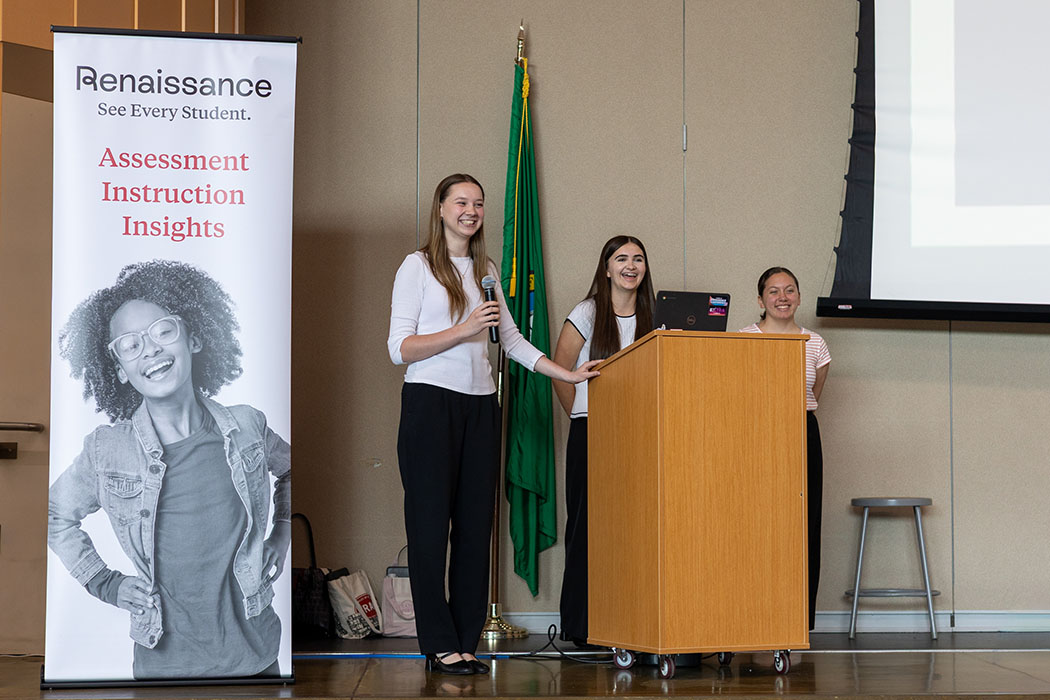
“We felt it was important to include students’ perspectives. They’re the reason we’re doing this job, and these new technologies will impact them for the rest of their lives,” said Katherine Livick, ESD 112 instructional technology coordinator and Rural CTE Cooperative manager. “They have a right to help define how AI is perceived by educators and how AI tools are used in the classroom.”
That conversation continued in the breakout session “AI in Education: Student Experiences & Teacher Conversations.” Paige Davenport and Madilyn Baldwin of Heritage High School and Jay Distant of Camas High School discussed how students use AI, their concerns about academic integrity and what they want educators to understand.
“Sometimes students just need a different way to understand something. AI can give you another method for solving or understanding a problem. I think AI should help you learn for the future, not do everything for you,” Distant said.
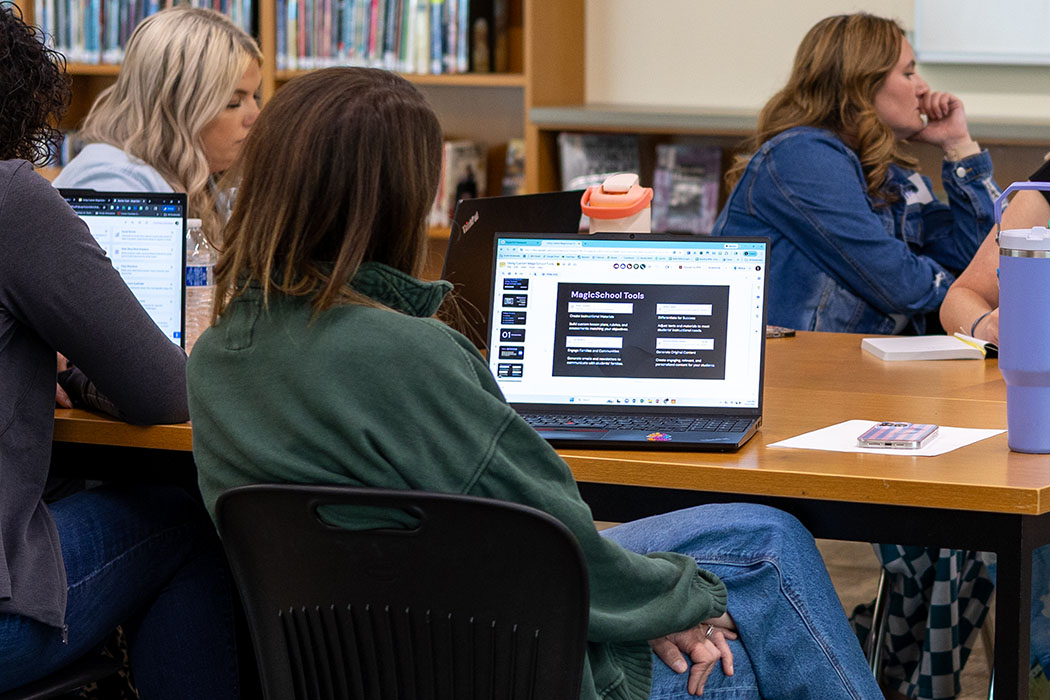
Sessions covered topics ranging from assistive technology and multilingual learner support to instructional planning, critical thinking, leadership and districtwide AI implementation. In one session, educators learned how AI tools like MagicSchool can help streamline classroom learning while maintaining student independence.
Todd Brekhus, chief product officer at Renaissance Learning, delivered a midday keynote on the intersection of AI and learning science and offered guidance on evaluating AI tools in educational settings.
Attendees said they appreciated the conference’s practical focus. One attendee wrote, “I left each session with actionable items that will improve my ability to teach students about AI and my own use of AI.”
Building on the response to the inaugural conference, organizers hope to establish Forward as an annual event where educators can explore emerging technologies with student learning at the center.
For more information about Forward ’26, contact Kristina Wambold, ESD 112 integrated educational technology coordinator, at kristina.wambold@esd112.org.


 ESD 112 equalizes educational opportunities for learning communities through innovative partnerships, responsive leadership, and exceptional programs.