Share this emailCopy the public link or share it on your favorite channel.
decorative

Your one-stop solution for all school safety needs.

Spring NEWS 2026

AT YOUR SERVICE

Susan Peng-Cowan photo

BEHAVIORAL HEALTH NAVIGATOR
Susan Peng-Cowan | Behavioral Health Navigator
Corina McEntire photo

SCHOOL SAFETY, PUBLIC HEALTH COORDINATION
Corina McEntire | Comprehensive School Safety-Public Health Coordinator
Don Lawry photo

STUDENT THREAT ASSESSMENT
Don Lawry | Threat Assessment Coordinator

traviseffinger

STUDENT THREAT ASSESSMENT
Travis Effinger | Threat Assessment Coordinator

Visit us online for full contact information on our safety center support team.

TRAINING OPPORTUNITIES

Calendar Icon
Are you in search of training opportunities? Check out pdEnroller for Regional School Safety Center Events
In-person and online training options are available now.

Your Regional Partner in

School Safety and Wellness

The Regional School Safety Center (RSSC) was established in response to state legislation aimed at improving both mental health systems and physical security in schools. As one of nine centers across Washington, ESD112’s center serves as a regional hub for prevention, intervention, and coordination — helping schools prepare for emergencies, respond to threats, prevent and address suicide, and promote positive school climates.

Our RSSC team is led by a team of educators, mental health professionals, and safety experts with deep experience in school systems, counseling, and crisis response. We work closely with school districts, the Office of Superintendent of Public Instruction (OSPI), statewide safety partners, law enforcement, and community mental health providers to create safe, supportive environments for students and staff. Below please read about each of our programs.

BEHAVIORAL HEALTH NAVIGATOR

Learn more about our Behavioral Health Navigator services on our website.

PROFESSIONAL LEARNING OPPORTUNITIES

An image of...

JED in schools opportunity

Through grant funding, JED High School delivered by Forefront is available to come directly to your school at no cost, for a limited time. JED High School delivered by Forefront is a comprehensive, evidence‑based program that helps schools strengthen their systems, culture, and practices to better support student mental health and suicide prevention.

This grant‑funded opportunity includes:
  • Expert guidance tailored to your school community
  • Partnership with national and local leaders in school-based mental health programming
  • Tools to foster a healthier, more resilient school environment
Availability is limited, and schools will be scheduled on a first‑come basis.

Interested in learning more or getting started? E-mail Sam Pacampara at samkpac@uw.edu or click here: www.jedfoundation.org/washington

April BHN Network Event

Our recent SEL and Wellbeing Network had a strong turnout for the topic “Avoiding Overaccommodation in Anxiety” led by Jennifer McMillan and hosted by Teresa Vance and Susan Peng-Cowan. 60 school counselors, staff, and mental health professionals from across the region came together for a practical and energizing conversation.

Our focus was on a key question: how do we support students with rising needs and increasing requests for accommodations around anxiety, and how we can respond in ways that build coping skills rather than unintentionally reinforcing avoidance. Participants explored approach vs. avoidance strategies, worked through real school scenarios, and shared concrete ways to balance support, empathy, and high expectations.

Thank you to everyone who joined and contributed to such a thoughtful discussion. A brief Tip Sheet from the session is included as a quick reference for continued use in your schools.
An image of...
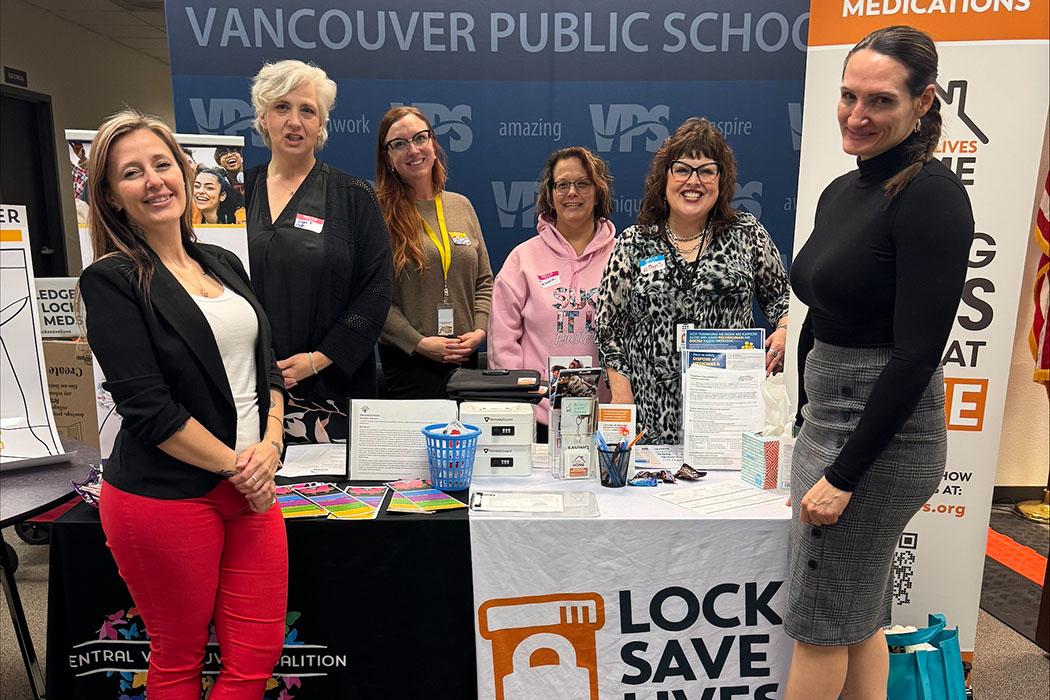
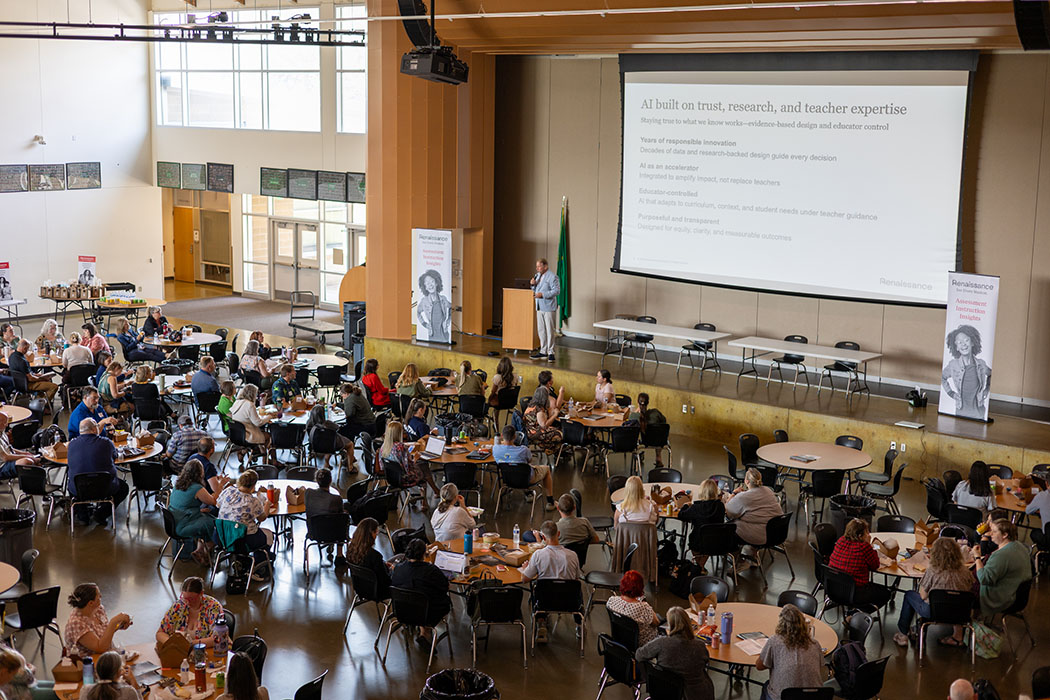
School professionals from across 18 different school districts gather for our regional Well-Being and SEL network event
An image of...
Thank you to Jennifer McMillan for an excellent presentation of tools to reduce anxiety without reinforcing avoidance

Announcing dates for the WELL-BEING AND SEL school-based network for 2026-2027 school year

An image of...
Please join us in our dynamic inter-district school-based network, which aims to enhance your skills and provide you with valuable resources to empower students for success.
In September, we are thrilled to welcome our VPS partners in an exploration of Chuukese culture. Please join to learn more and connect with the work of other districts!

QPR Training for ESAs

QPR Institute
Suicide prevention trainings are offered regionally for ESAs needing PESB certification

There is one final regional offering for the 2025-2026 School Year!

Wednesday May 20 in person @ ESD112 from 9am-noon https://www.pdenroller.org/esd112/catalog/192177
Smart Logo

SMART

School Mobilization Assistance Response Teams (SMART) are available in all our districts in our region. SMART responds to schools during a traumatic event that emotionally impacts students and staff. In addition to crisis management services, SMART provides comprehensive training to help prepare your school and staff in the event of a crisis of any magnitude.
Next SMART update for existing members will be held on 6/5/26 in person at ESD112. Registration here https://www.pdenroller.org/esd112/catalog/204982

BHN Consultation re: RCW 28A.320.127:

Development of comprehensive suicide prevention and behavioral health supports for students. Your regional Behavioral Health Navigator is available to assist districts with creating district plans. RCW 28A.320.127 requires all K-12 school districts to adopt a plan to screen, recognize, and respond to indicators of Social Emotional Behavioral Mental Health (SEBMH).

Our BHN has collaborated with numerous districts to create these plans or formalize existing procedures into a cohesive strategy. We invite you to schedule a time to discuss developing your district’s SEMBH plan and address any questions you may have. You can use the link below to book an appointment: Behavioral Health Navigator 112 bookings

More resources can be found on our website: Behavioral Health Navigator – ESD 112

STUDENT THREAT ASSESSMENT

The inside of a classroom
If you would like to schedule a threat assessment training for your district, or even just your building, please contact us. We would love to do that for you! Best practice means at least one staff member in each building is trained in threat assessment. Remember, level 1 threat assessment forms are only to be used by those who have been formally trained in the SK Cascade Threat Assessment model. If you have a situation in which you are uncertain if a threat assessment is indicated, or you just want to talk through a concern you’re having with a student, we are happy to help!

The ESD 112 Threat Assessment webpage has been updated - www.esd112.org/safety-center/threatassessment/ - come check out the newly added content and resources.

Let’s talk threat assessment:

Dr. Dewey Cornell, forensic psychologist, education professor at University of Virginia, and developer of the CSTAG model of threat assessment, reminds us that most student threats are not serious and behavioral threat assessment is designed with two goals: identify the uncommon cases of a serious threat and keep from overreacting to the numerous threats that are not serious. All acts of violence fall into two categories. The first is impromptu or reactive violence. As its name indicates, it results from a spontaneous, unplanned act that occurs in the emotional heat of the moment. The second category is intended or targeted violence which, conversely, culminates a planned, premeditated act. The threat assessment process works by creating “offramps of intervention” for at-risk individuals on the pathway to violence. An effective threat assessment process will provide help to students of concern and ensure positive outcomes for both the student and the community.

Threat assessment has proven to be a very effective violence prevention method. In 2017, a study of 1865 TA cases in Virginia found that students who received a TA made no attempt to carry out their threat in 97% of cases and only attempted a violent act in 3% (62) of the cases. Of the 62 attempted cases, school authorities averted the attempt in 49 cases so that there was no physical injury to anyone. In the remaining 13 cases, a student who received a threat assessment subsequently carried out the threat, which in all cases involved an assault or fight (NCSS TA Toolkit 2024). In addition, another study in Florida, conducted by Dewey Cornell, examined 22,000 student threats of violence in one school year. Dr. Cornell found that very few threats were attempted or carried out; less than 1% resulted in serious injury, and less than 1% of students were arrested.

In regard to targeted violence, the United States Secret Service (USSS) conducted a study between 2016-2020 looking at 173 mass attacks in public spaces that occurred during this time frame. The USSS found that of these 173 attacks, only 13 were in educational settings. 7 high schools, 3 elementary schools, 3 universities. Of the 173 mass attacks, school mass attacks accounted for only 7.5% of all attacks. 92.5% of all mass attacks occurred in public spaces other than an educational setting. School shootings are statistically rare and will never occur in most schools. School homicides…”represent less than 2% of youth homicides in the U.S.” However, “the traumatic impact of these homicides is far reaching and affects millions of students, parents, and school personnel leading to the public perception that schools are not safe and has motivated the expenditure of billions of dollars on building security measures” (NCSS TA Toolkit 2024).

Threat assessment considerations:

First, research shows that students display a variety of observable concerning behaviors as they escalate towards violence. Problem individuals tend to self-identify themselves to someone else. They may communicate inappropriately to the target, talk about their plans to third parties, write, text, post their intentions on the internet, and/or engage in stalking or research behavior witnessed by others. This is referred to as leakage. A drip, drip, drip, of signs that someone has a perceived grievance, may not have the right coping mechanisms, and may consider violent action.

Second, threat assessment cannot begin at breach or attack. Thus, it is crucial that the identification of concerning behavior occurs much earlier. Institutions need to cultivate and promote a solid reporting process so that potential targets, their staff, and their families know what to be aware of, what to report, and whom to report it. Reporting inappropriate communication or suspicious behaviors early allows time to initiate the threat management process. “See Something/Say Something” is an important first step, but it is not enough. Once reported, we must connect the dots to get a picture of the situation. However, they must be the right dots, or we will be doing a poor assessment, and we will not have an effective management plan.

Third, remember that all informants of concerning behavior need to be treated with great caution and skepticism. They can be very manipulative. They can appear very sincere and convincing, and elements of their story can be verifiably true. In all cases involving an informant, the informant’s credibility needs to be assessed before making decisions based on the informant’s information. In social venues susceptible to the leakage phenomenon, such as schools and workplaces, the source of the leak should be treated as an informant whose credibility needs to be established. In sum, individuals who pass along derogatory information about other individuals should not be automatically accepted as credible. Whether in workplaces or schools, informants must first be assessed for credibility before their information or allegation is deemed to be accurate and true, especially in the age of artificial intelligence (AI) and deepfakes.

Fourth, profiling is not an option when it comes to threat assessment. One of the main reasons is that profiling creates missed opportunities of intervention. An individual becomes so focused on their beliefs/biases that they miss what is actually going on in a given situation. Another very important argument against profiling is that it creates a hostile institutional environment leading to negative relationships, distrust, conflict, and non-reporting of concerning behavior. Remember, if there is no reporting, then there is no investigation. If there is no investigation, there is no intervention.

Finally, an overall assessment of risk cannot be determined without looking at an individual’s internet activity. When a threat assessment is activated, a digital assessment must also be activated immediately. Threat assessment teams are missing a wealth of information if they do not look at online activity. The internet is providing a “safe haven” for targeted violence rhetoric where individuals become radicalized and compete to outdo each other; they are emulating previous mass attackers. Sadly, in the online arena, there are “targeted violence influencers” just like “social media influencers.”

COMPREHENSIVE SCHOOL SAFETY

Back to School

Spotlight on Wildfire Safety

An image of...
Wildfire seasons start earlier and last longer, and forecasting shows this season might be particularly dry. Many schools in our region face the impacts of wildfire, whether from the risk of direct destruction of buildings by flames and embers, or significant health and property damage from smoke and ash. Does your district have a wildfire annex? Do you have building use agreements in place for emergency responders? Are your families signed up for emergency alerts? Review the resources below and connect with your emergency management experts.

An image of...
May 15th is Water Safety Day! Yori's Law (House Bill 1750) designates May 15th as Water Safety Day and promotes education and awareness around water safety. Share these important resources with students and families.

National Drowning Prevention Alliance
Think Before You Jump Water Safety Campaign
Aware – Caution – Think PSA - Important message about swimming safety brought to you by the Vancouver Fire Department.

School Safety & Security Staff Data Collection


OSPI is kicking off the annual collection of data on school safety and security staff, as required under RCW 28A.320.1241. This helps fill in gaps beyond what’s already reported in CEDARS and the S-275 system, giving a clearer picture of who is supporting safety in schools across the state.

Data collection links will be distributed via email to designated district contacts on April 27, 2026. Completed submissions are due no later than May 29, 2026. Additional details, including information on how to change a designated district contact, can be found in this data collection note.

Building Safer Schools Together Series


Join OSPI and subject-matter expert Dr. Melissa A. Reeves to the Building Safer Schools Together Series. This free webinar series focuses on prevention, intervention, and long-term recovery efforts in K–12 settings: School-Based Crisis Prevention and Intervention, Mental Health in School Safety Strategies, and Advanced Behavioral Threat Assessment & Management.

It’s not too late to enter the Tabletop Challenge!

Schools can win a free emergency kit by conducting their own tabletop exercise. All schools are encouraged to participate. Enter to win by Friday, May 29th!
Was this email forwarded to you? If you would like to subscribe to our newsletter, you can do so on our Regional School Safety Center (RSSC) webpage.
decorative